

Hello bookworms, one thing about studying abroad, to warn you all, is that you will miss your mother. This may seem glaringly evident; however, past Erin, silly old me, silly August Erin…quite overestimated her abilities. The only upside I can recount to being away from my lovely mom is that she cannot stop me from reading philosophy. This means I can indulge….ah yes…for hours upon hours…and NOBODY can stop me. It may seem laughable upon first thought, but there’s some validity to her worry. I can truthfully see how people may spiral when they read some of these texts.
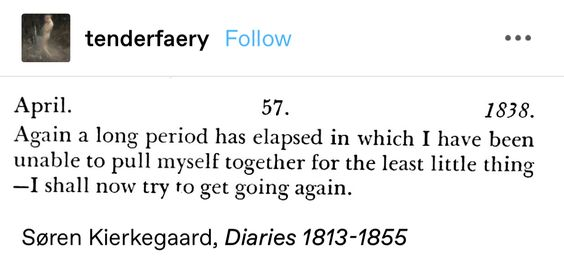
Existentialism, at first glance, at least to me, seems like a scary concept. One that threatens uncertainty, perhaps provoking and heightening our deepest worries about life and death. Even determinism, which is an outlandish assertion to me but one that’s equally contentious, can threaten our core truths and beliefs. I’m frankly not too interested in these two theories. But in general, I adore, and I mean adore, philosophy, as it mainly reminds me of the importance of mindset and our perspectives—the way any idea can be seen as both a tremendous positive and a terrible truth. We can be set free by the very same argument that may make you feel so inherently trapped. One moment, you are overwhelmed with a sense of dread and crisis. Next, you think of the collapse of everything you’ve ever known, designing and realizing a completely unexplored value system or meaning altogether.
However, when I get into my “thinking bubbles”(as I like to call them), forgetting for a while that I am not the only human on earth who has specific thoughts about myself and the world. When overwhelmed by the entirety of our existence, philosophy is there to steady me. A gentle pinch and someone telling me I’m being far too dramatic may do the same, but look around and tell me everything isn’t all at once beautiful and tragic; I dare you!
Reading that someone, someone my age centuries ago, was dealing with the same ideas and thoughts as myself is comforting. I immensely treasure that, as complex as we are, we are so simple. We reverberate to the things we’ve thought countless times until we believe there’s possibly no aspect to this thought that we haven’t disgustingly overthought, and then we find one. You see a slightly different angle, or perspective, that refreshes the same overthought idea in a way you never imagined, even five minutes ago.

To get to the point, last week, I came across a video from one of my favourite channels. This very day, I was struggling with some common feelings of anxiousness that I wasn’t giving much thought to, and when I saw the title, it just made sense to watch. Before watching this, I had never read a philosopher’s work that was genuinely so relatable to me, down to his every thought. We are the same. It’s a bit jarring how similar our struggles are.
However, after saying I identify quite heavily with him, I realized we did diverge crucially. I have not read any of his texts, but from the consensus on commonly debated principles humans deal with, I find our thoughts on love are contraries. When describing his first love, Regine Olsen, I was intrigued by his shallow reasonings not to marry her. I have always loved understanding the point of view of a self-aware individual when they make a decision I’m afraid I have to disagree with. Mainly because that’s when I feel I learn best. It’s when, although I may stand so far from agreeing with that action, I can respect the decision. He specifies that if he had married her, he essentially was robbing himself of the feeling of falling in love.
I think what he failed to realize was that, yes, perhaps he was correct in that sensation of being robbed, but he was equally denying himself of other phenomena. The notion of unconditional, constant love is presumably exhilarating. To devote yourself to someone, to be vulnerable to another soul, is terrifying in a completely different manner. One that he later understood, perhaps, when he would look back on that decision and say he would’ve married her had he had faith.

I’m not sure what he means by faith, whether it be in a more religious context or the faith we all hold, the hope within us that continues to govern us. Regarding religion, I think it’s worthwhile to think critically about why so many people have chosen similar paths and different versions of the same thing. We all yearn and desire something, some meaning that extends beyond ourselves and our physical time on earth. Thus, the way I perceive his decisions concerning faith is that he couldn’t open this belief he had himself to her, nor their relationship, later regretting it.
Søren ideas on anxiety are the ones I found most similar to mine. Truthfully, I try to remember the good days or moments rather than the bad. One may say I have voluntary amnesia of some sort, and I love it. I think this is partially why our minds are so wonderful and so powerful. It appears that I won’t derive benefit from retaining exact details, so I don’t. What tends to work for me doesn’t work for everyone, and vice versa. Personally, if I’m struggling with thoughts that could be categorized as anxiety or a disorder, I don’t believe labelling myself in that way is necessary. It wouldn’t validate me but trap me in a box. Allow me to indulge in self-destructive behaviour because I would feel that I am justified to do so.
Back to Kierkegaard. I find it so fitting that I’ve connected with him now, as I’m in Copenhagen, only to find that was his birthplace, having even attended the University of Copenhagen, at which I am currently studying for the semester. He is considered the founding father of existentialism as a philosophical term, authoring many books on theology, philosophy and psychology.
Not to mention, he’s quite an attractive individual…and eloquent with words(can he come back)??? It strikes me as fascinating that he felt so alone, probably the source of much of his anxiety. He once said, “I’m so misunderstood that people misunderstand me even when I tell them I’m misunderstood.” If I have ever related to something more, I am not quite sure. Almost more than what he has to say, I immensely appreciate how he phrases his thoughts; they are much more approachable than any other philosopher I’ve come across. When he shares his feelings, it’s like talking to a friend, confessing something you’ve kept to yourself, without fear of judgment or retort.
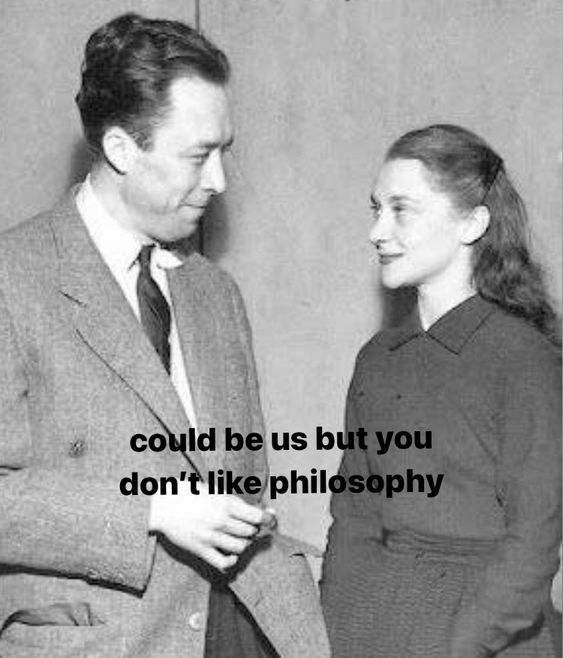
One of his notable sayings is that life can only be understood backward, but it has to be lived forward. He refers to this more broadly as “the dizziness of freedom. ” And I don’t know if I’ve ever read something so beautiful. A sentiment that can at once make me look out at the world with the will to discover every inch of it or end up in an equally possible pit of despair.
We all despair in this life. Søren acknowledges our innermost uneasiness in writing, “If you don’t think you are in despair, you are lying to yourself, which is an even worse form of despair”; freed from this condition only when acceptance comes of its inevitability and obligation to oneself.

Please, please, please! Talk to me in the comments; I am new to Søren and philosophy as a whole discipline. Recommend me books and articles(or songs and dances; anything works); I am ready to learn. Remember to take care of yourself, and if you don’t listen to me, listen to Søren; “To be entirely present to oneself is the highest thing and the highest task for the personal life,” he writes.


 Reading On A Star
Leave a reply to SumOne Cancel reply